Lunedì 10 giugno alle ore 21.00 all’interno della sede della Florence Academy of Art terremo la prova generale del concerto di martedì 11 giugno alla Chiesa di St.James. L’ingresso è riservato agli studenti ed ai collaboratori della scuola. Un particolare ringraziamento al direttore che ci ha aperto le porte della splendida scuola quando eravamo alla ricerca di una sede. E un ringraziamento particolare a Angel Ramiro Sanchez, nostro violista, che ha fatto un grande lavoro di coordinamento.


Greetings to you all! A brief introduction. Every monday for the past 20 years we have been meeting to play music, a passion that we all share. In january this year, 2024, a brand new orchestra was formed. “Orchestra Umana Armonia.” A huge thankyou to the Florence Academy of Art for giving us the opportunity to rehearsal in their magnificent exhibition halls every monday evening. We also thank The Fronde Sonore Association for their support and promptness in giving us membership and the legal support that we needed to form the orchestra. The passion that drives us to play musical works which are often complex has been imprinted in us through our close connection with a great musician and conductor, Johanna Knauf. A Little over 20 years ago Johanna founded the Orchestra Desiderio da Settignano, in which many of us had the privelige to play in. Through orchestral rehearsals and much patience Johanna was able to create and develop in every one of us her desire in sharing music together. She shaped us musically, laying the foundations this year, 2024 for a new orchestra. The tragic loss of Johanna four years ago has brought us to seek fresh inspiration and therefore new collaboration with young conductors and composers in this our initial phase. With them we are experimenting different genres and musical periods. As an orchestra we embrace the fundamental ideals of peace & serenity. We warmly welcome new members to our orchestra. Tonight we are thrilled to welcome you to our first concert and your presence here sincerely warms our hearts. We hope you enjoy our concert and invite you to follow us on the social network or leave us your email so that we can inform you of future projects.
In the name of “Umana Armonia “

Belinda É. Samari
Why do people flock to see Firenze’s Duomo? Because once upon a time someone believed in creating a space that would be meaningful beyond its time. Music is space. Debussy made incredible spaces that are different from the spaces that Bach or Verdi constructed, or any number of people whose music we play over and over in our concert halls. Why do we do that? In those musical spaces we are nourished, inspired, renewed (and so much more) and that is why we recreate them over again. Their enduring quality is why as we listen, we can still have powerful experiences in this day and age, even though they were created hundreds of years ago. Have we exhausted the architectural potential of music? Not at all. There are spaces that we need to live today because of who we are today; we need them because of how the world is now that differs from the world of the 18th, 19th or even 20th century. We still live Stravinsky’s Printemps today, but it was primarily a space that people in the early 20th century needed to live for a variety of reasons. I believe our heritage is to preserve the spaces that have already been constructed and to add to them the spaces that are being created today – when we do so we enlarge the territory of music, we enrich its vocabulary and add new colours to the palette. That is why I write music. I do not presume to stand in the company of the great musical architects of the past, but I gladly share the spaces I have created and warmly welcome you to join me in them. — Belinda
*Belinda É. Samari is a polyvalent international artist living in Rome.

Tommaso Giannoni was born in Florence July 31, 1999. Tommaso began studying music at a young age at the musical secondary school of Pistoia, the “T. Mabellini” music school in Pistoia and later on, at the “Luigi Cherubini” Conservatory of Florence where he graduated in flute. He is getting his Master’s degree in orchestra conducting under M° Alessandro Pinzauti at the same Conservatory and also studying composition. He is the musical director and conductor of the Emanuele Muzio Youth Orchestra “OGEM”, the Orchestra Umana Armonia and of four adult and youth philharmonic orchestras in the cities of Quarrata, Prato and Sesto Fiorentino.
Sinfonia n.7 in la maggiore Op.92 by Ludwig van Beethoven
Poco sostenuto – Vivace
Allegretto
Scherzo Presto – Trio assai meno presto
Allegro con brio

Sara Pace was born on November 27, 2001 and began studying music in 2008 in the piano class of M° Francesca Fruzzetti at the “Filarmonica G. Verdi” music school in Montemurlo. In 2012 Sara studied solfeggio (musical theory) and ear training under M°s Elvira Muratore and Filippo Umberto Mascii. In 2017 she played percussion in the Filarmonica “G. Verdi” and beginning in 2023, is their substitute conductor. Since 2021 Sara has studied conducting under M° Pinzauti at the “L. Cherubini” Conservatory in Florence.
Greetings! My name is Sara Pace and I am a student in the Orchestra Conducting course of the Luigi Cherubini Music Conservatory in Florence. I am very pleased to be working with the Orchestra Umana Armonia and the composer, Belinda E. Samari, for the next concerts in which we will perform two pieces from her suite, Landscapes Within. I have had the opportunity to discover new musicians and my own capabilities so I look forward to sharing this experience with you at our concert on Tuesday, June 11 at 8.30 p.m. in the St. James Episcopal Church, Via Rucellai 9, Florence.
‘Landscapes Within’ by Belinda É. Samari
4. Asari – Searching
9. Sosei – Rebirth

LANDSCAPES WITHIN
Landscapes Within is a 9 piece musical suite, a journey from light through to deep
darkness and back into the light. We will perform two pieces, ‘Asari
(Searching) and Sosei (Rebirth) together with an orchestra who were themselves
searching after having come through a difficult crossroads. Here is what
someone had to say about it: “When I first heard about Landscapes Within I thought that it was an interesting experiment I would love to explore. Instead I found myself in a wonderful internal journey of life, from melancholic separation to the conquest of happiness and from the uncertain horizons of something new to the abyss of a possible failure. Belinda’s music is a palette of emotions that exists within each one of us waiting to be remembered. From the purity of the blue sea to the innocence of transparent marbles, this was an exploration of oneself with dark moments of solitude and bright touches of immortality. In between Belinda has composed the circle of life decorated with flowers, flying butterflies, and a rainbow of magic.”
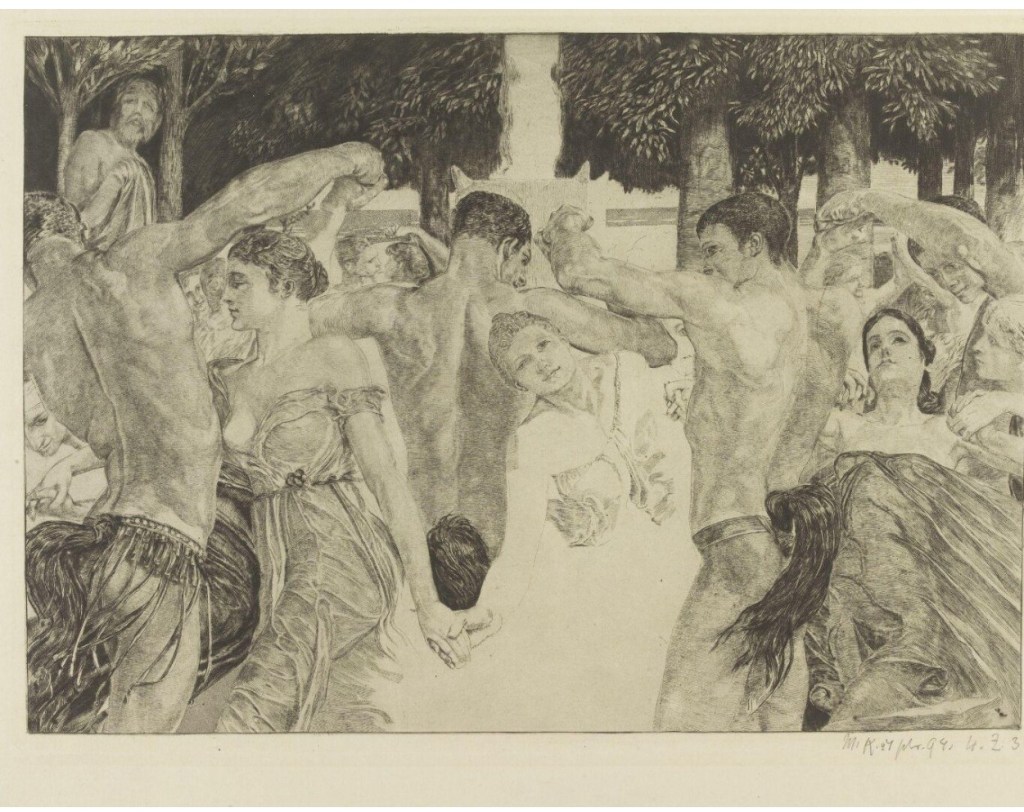
the seventh symphony
Beethoven composed his seventh symphony in 1812 and it was first performed in Vienna in December of 1813. It was described at the time as the apotheosis of dance in its most sublime essence. Its gradual rhythmic continuity, which runs through the entire symphony, reaches a complex, unifying triumph in the final movement.The seventh symphony has four movements: poco sostenuto – vivace; allegretto (A minor); presto (F major); and finally allegro con brio. The introduction (poco sostenuto) begins with an enormous musical breath which is connected to the following passages of the first movement, without serving as a decorative preamble. The vivace (which reappears in the final movement) is based on interplay of harmonic tension and relaxation, with sudden alterations in volume, resulting in explosive changes in timbre and register. Our attention is focused on the rhythmic vitality of the music, accentuated by tonal and stylistic variation while the frenetic pulsation dominates the development with alternating themes between the strings and wind instruments. The allegretto, which begins and ends with an A minor chord by the wind instruments, is one of the most beloved movements in all of Beethoven’s symphonic oeuvre and is based on a single rhythmic pattern which remains prevalent and dominant. The appeal and attraction of this music is also due to the harmonious melodic line, interwoven with inconsolable passion whose principal subject gradually spreads through the entire orchestra, arriving at an expressive climax which then diminishes and dies. The scherzo (presto) is modeled on the usual technique of alternating and successive small melodies, rhythmic modulations, and sudden musical exclamations from different instruments. The trio seems to include a remembrance of an Austrian popular sacred song which behaves as a repetition of the serene and composed melody (presto meno assai) and as a lyrical touch. The final movement (allegro con brio) is reconnected to the joyful pace and rhythmic exaltation of the first movement, creating a frenetic development. Opening with a marked rhythmic pulsation, the final movement interrupts with a dance theme which ends in a glorious jubilation of musical motifs. In the middle of the movement, the quiet murmuring of the basses grows gradually as the tension in the orchestra reaches fever pitch, and flows into a glowing vortex of concluding voices. The rhythmic attraction, repeated twice at the beginning, then abruptly truncates the seductive atmosphere of the symphony after having affirmed, once again, all its brilliant splendor.
Tommaso Giannoni
 Orchestra Umana Armonia